

1 Countries, 3 vastly unique programs.
This May we facilitated three programs to Costa Rica, but all with unique itineraries, tailored exactly to the academic requirements across health care, service learning and tropical ecology and conservation.
Surrounded by heat and humidity, participants from three institutions embarked on three separate faculty-led programs. The result? Three programs designed and tailored to academic courses and specific learning outcomes in one country, executed simultaneously.
In this blog we’ll review the May programs from Costa Rica, where FSW focused on Allied Health, CPCC studied biology and tropical ecology, and SCC emphasized service learning. We’ll also gain a clearer explanation of what service learning is and how it can be applied across faculty-led programs for enriched experiences.
Costa Rica as a Key Destination for Faculty-Led Programs across all Areas of Focus
Costa Rica is a small but remarkably vibrant country; within it, 6% of the world’s biodiversity is safeguarded by Indigenous peoples, locals, and conservationists. It has lush rainforests, active volcanoes, and pristine Pacific and Caribbean coastlines packed between Nicaragua and Panama. Costa Rica, while its natural beauty is at the forefront, is the perfect destination for nature-focused faculty-led programs. It offers a deep and diverse array of learning opportunities, from local Indigenous knowledge to a vibrant music and dance culture and beyond.
What is a Service Learning Faculty-Led Program?
Unlike a traditional faculty-led program, a service learning faculty-led program involves an educational approach integrating a meaningful community service project with local instruction, empowering students to support the communities they are visiting and apply the academic knowledge they’ve bene building to solve real world problems and understand the context of their education in a global environment. Unlike traditional volunteering, service learning requires an alignment with academic curriculum, reflection, and engaging in active, experiential learning while acting with civic responsibility.
One of the key benefits of service learning in faculty-led programs is that students and participants experience their academic learnings through alternative perspectives different than their home country, gaining empathy, knowledge, collaboration and problem-solving skills which create a life-long impact on their education and inspiration to pursue work within their academic field.
Allied Health Care in Costa Rica with Faculty-Led Learning
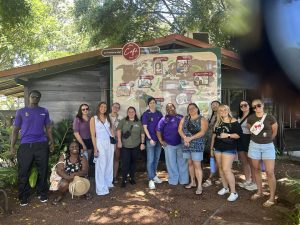
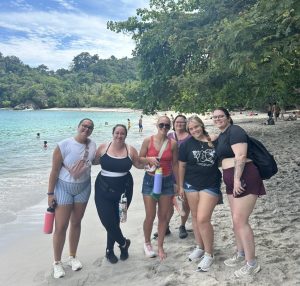
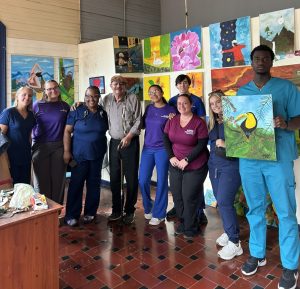
Recently, Study Abroad Association partnered with Florida SouthWestern State College for a Faculty-led program with service learning focused on Allied Health in Costa Rica. In this program, participants had the incredible opportunity to be active participants in clinical rotations, help rebuild facilities at a local rehabilitation center, and explore Costa Rica.
This program offered FSW students the incredible opportunity to engage in service learning in Costa Rica. Participants started in San Jose, learning medical terminology in Spanish, and then in Manuel Antonio, where volunteers revamped the sanitation facilities at a local rehabilitation center for men experiencing substance abuse issues. Participants continued this work throughout the program, leaving a lasting impact and improving the conditions for the patients at the center. Another day, participants visited a rural clinic to understand the experiences and conditions of Costa Rican medical professionals in rural settings.
Throughout the program, participants were involved in a Clinical Rotation, each day experiencing a new placement to gain an overview of healthcare in Costa Rica, including local clinics, hospitals, ambulance services, assisted living facilities, and special schools for children with disabilities. Participants shadowed medical professionals and assisted with consultations, triage, vital sign measurements, and general patient care and companionship.
Program Highlights
- Manuel Antonio National Park
- Coffee Tour at Café Britt
- Jungle Night Tour
- Lecture: Costa Rica’s Epidemiology and The Costa Rican Health System
- Lecture: Health and Blue zones
- Lecture: Clinical Nutrition in Costa Rica
- Visits to a Public & Private hospital
- Visit a Rural Clinic
- Visit a Tertiary Level hospital
- Service learning activity
- 4 clinical rotations
Faculty-Led Programs for Biology and Tropical Ecology in Costa Rica
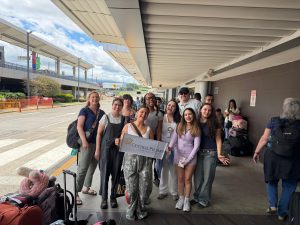
The faculty-led program from Central Piedmont Community College took advantage of the incredible biodiversity of Costa Rica, and focused biology and tropical ecology for their faculty-led program. Participants kicked off their program with a visit to the Universidad de Costa Rica (URC) to learn about the country’s biodiversity and to draw comparisons with their own institution.
Participants traveled to Cahuita, where they enjoyed snorkeling in a protected coral reef teeming with marine life, including colorful fish, turtles, and even sharks. Afterward, they visited Manzanillo National Park, known for its natural beauty, wildlife, and tranquil atmosphere, to observe the park’s biology and ecology.
Participants also visited Cahuita National Park. On a highly active day, participants saw monkeys, sloths, raccoons, and more of Costa Rica’s rich biodiversity. They visited a nearby beach and collected data there. Participants further developed and enriched their knowledge through indigenous ways of knowing in the Bribri Indigenous Community. Here, they learned about their day-to-day lives, their culture, and medicinal plants and how they intersect with nature.
Participants visited the Night Leatherback Turtle Project to learn about the conservation of this species and got the opportunity to patrol and see the largest species of sea turtle in the world!
Participants visited Tirimbina, where they toured the biological reserve and observed its rich flora and fauna. They scouted for monkeys, parrots, and frogs, among the species we are going to look for.
Participants took advantage of Costa Rica’s extremely high biodiversity, observing a forest at sunrise to witness the most active parts of nature, encounter tropical species, and observe the challenges they face in co-existing in their ecosystems. To cool off in the heat and humidity, participants went white-water rafting on the Sarapiquí River to have fun, of course, but also to observe the changing river levels.
At night, participants used the darkness to conduct bat mist-netting; in Costa Rica, there are 113 bat species, and they had the unique opportunity to study them and observe endangered species.
PROGRAM HIGHLIGHTS
- Visit a Local University
- Cahuita National Park
- Manzanillo National Park
- Night Leatherback Turtle Project
- Bribri Indigenous Community
- Tirimbina Biological Station
- Snorkeling
- White Water Rafting
- Proyecto Asis
- Arenal Volcano
- Night Bat Mist-Netting
- Arenal Hanging Bridges
- Night Leatherback Turtle Project
Learn by Doing: Service Learning Across all Needs in Faculty-Led Programs
In a program for Sandhills Community College, participants embarked on a journey of meaningful community service, where participants engaged in a full 360 of service-learning opportunities, from elementary school volunteering to turtle conservation and environmental preservation.
Building on these experiences, during their visit to Cahuita National Park, participants worked with local naturalist guides to preserve the park’s ecology, including beach and park cleanups, installing garbage and recycling containers, trail maintenance, and painting ranger stations.
In addition to park preservation, participants had the opportunity to work in Turtle Conservation, performing a demarcation and census of the turtles. The work done by students will help ensure that they have an effective birth during hatching season, preserving the local populations.
Beyond environmental work, students also experienced local culture, including a football match in San Jose and a visit to a coffee plantation to learn about local agricultural practices, sustainable coffee production, the supply chain, and processing. They visited Irazu Volcano – the highest Volcano in Costa Rica.
To further connect with the community, participants were also introduced to local culture through dancing and Calypso music, which dominates southern and eastern Caribbean islands. Participants snorkelled, visited Playa Negra, and took a Traditional Caribbean cooking class.
Continuing their exploration, participants also visited a Bribri community to learn about Indigenous knowledge through medicinal plants, traditions, and chocolate-making.
Finally, participants visited an elementary school to speak English with students and volunteer in their daily routine. Students then supported beautification by painting murals and removing graffiti to improve local communities.
PROGRAM HIGHLIGHTS
- Community projects – schools and environment focus
- Cahuita National Park
- Bribri Indigenous Community Visit
- Introduction to Natural Products, Medicinal Plants
- Traditional Caribbean Cooking Lessons
- Introduction to Local Dance & Calypso Music
- Playa Negra
- Snorkeling
- Manzanillo National Park
- Turtle Conservation Project
- Community Paintings & Murals
- Football Match
Costa Rica as a Key Destination for Faculty-Led Programs
While Costa Rica is a key destination for biodiversity and environmental research in faculty-led programs, it’s also an incredible place for students of medicine, service learning, history, art, culture, and humanities. It’s not limited to its incredible biodiversity; these three tales, or rather, faculty-led programs, exemplify this.
If you are ready to create your next faculty-led program in Costa Rica or anywhere, contact us now!